

Introduction: The Dawn of a New AI Era
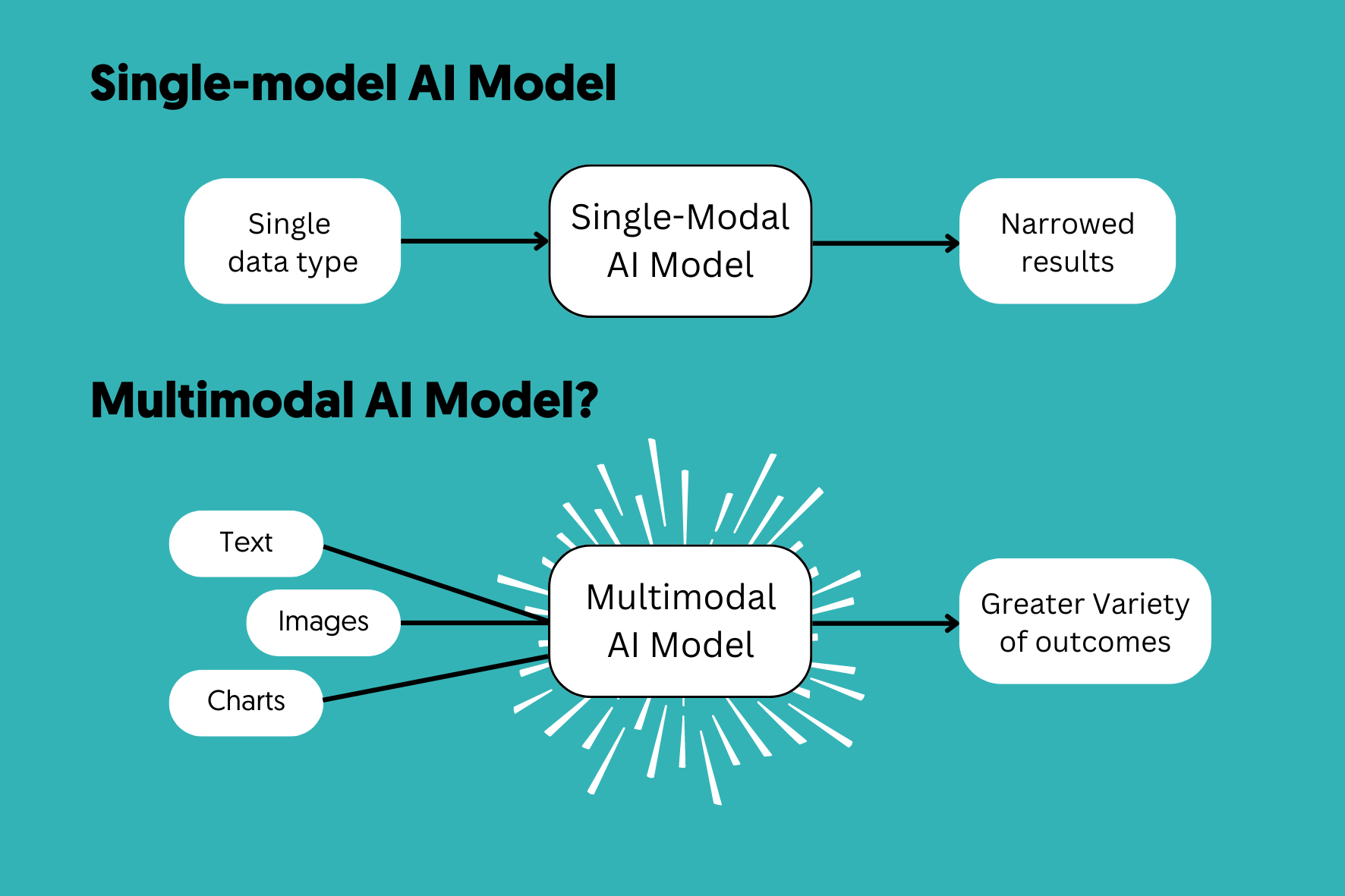
The landscape of Artificial Intelligence has undergone a seismic shift. We have moved beyond the era of unimodal systems that could only process a single stream of data—whether it was text-based Large Language Models (LLMs) or isolated Computer Vision algorithms. Today, the spotlight is on Multimodal AI, a sophisticated framework that allows machines to interpret, synthesize, and respond to multiple types of data inputs simultaneously.
In 2026, Multimodal AI is the backbone of next-generation applications, from autonomous surgical robots to hyper-realistic virtual assistants. This 1500-word comprehensive guide explores the architecture, the technological breakthroughs, and the profound impact this technology has on global industries.
1. What is Multimodal AI? A Deep Dive into Definition
Multimodal AI is a subfield of machine learning where models are trained to perceive information through various “modalities.” A modality refers to a specific way in which something happens or is experienced. In the digital world, these modalities include:
- Text: Natural language, code, and structured data.
- Vision: Static images, thermal signatures, and dynamic video streams.
- Audio: Speech, ambient noise, and ultrasonic frequencies.
- Sensory Data: GPS coordinates, LiDAR points, and biometric signals.
Unlike traditional AI, which operates in a vacuum, Multimodal AI creates a “holistic understanding.” It doesn’t just see a picture of a fire; it hears the crackling sound, reads the temperature sensor data, and understands the emergency protocol text all at once.
2. The Architecture of Multimodal Intelligence
To reach a 1500-word depth, we must analyze the three core architectural pillars that make Multimodal AI possible.
2.1 Encoding and Representation Learning
Every piece of data must be translated into a language the computer understands—vectors. In a multimodal system, we use “Encoders.”
- Vision Transformers (ViT): These handle the visual input by breaking images into patches.
- Neural Audio Encoders: These transform sound waves into spectrograms.
- Text Embeddings: Models like BERT or GPT-based tokenizers handle the linguistic data.
2.2 The Fusion Mechanism
This is where the “magic” happens. Fusion is the process of merging these different vectors into a single “thought” or representation.
- Early Fusion: Merging raw data at the input level. This is difficult because pixels and words have very different structures.
- Mid-Fusion (Hybrid): The most advanced method where modalities interact at various layers of the neural network. This allows the model to realize that a “barking sound” in the audio corresponds to the “dog” in the video frame.
- Late Fusion: Processing each separately and averaging the results.
2.3 Cross-Modal Attention
Borrowed from the Transformer architecture, the Attention Mechanism allows the AI to focus on specific parts of one modality based on another. For example, if the AI is asked “What color is the car?”, the attention mechanism tells the model to look at the “visual” pixels while ignoring the “audio” background noise.
3. Why Multimodal AI is Superior to Unimodal Systems
Why go through the complexity of building multimodal models? The answer lies in Contextual Accuracy.
- Disambiguation: If a user says “Look at that bank,” a text-only AI doesn’t know if they mean a riverbank or a financial institution. A multimodal AI sees the water in the camera feed and immediately understands the context.
- Redundancy and Robustness: If the audio is noisy, the AI can rely on lip-reading (visual) to understand the speech.
- Enhanced Creativity: Generative AI can now create a video (visual) that perfectly matches the rhythm of a song (audio) based on a short prompt (text).
4. Industry-Specific Use Cases in 2026
4.1 Healthcare: The AI Physician
Multimodal AI is transforming diagnostics. By combining a patient’s Electronic Health Records (EHR), Genomic sequences, and Radiology images, AI can predict diseases like Alzheimer’s years before symptoms appear.
4.2 Manufacturing: Industrial IoT and Edge AI
On a factory floor, a multimodal system monitors a robotic arm. It uses vibration sensors (haptic), cameras (visual), and log files (text) to predict a mechanical failure before it happens, saving millions in downtime.
4.3 Retail: The Ultimate Personalized Shopping
Imagine a mirror in a clothing store that sees what you are wearing, hears you say “I want something more formal,” and suggests a blazer that matches your style, size, and the current weather outside.
5. Prominent Models Leading the Race
As of 2026, the market is dominated by several key players:
- GPT-4o (OpenAI): The “o” stands for Omni, reflecting its native multimodal design.
- Gemini 1.5 Pro (Google): Known for its massive context window, capable of processing hours of video and thousands of pages of text simultaneously.
- Claude 4 (Anthropic): Focused on high-level reasoning across visual and textual data with an emphasis on safety.
6. Technical Challenges and the “Compute” Barrier
Building these systems is not easy.
- Data Alignment: Finding datasets that have perfectly aligned audio, video, and text is extremely rare and expensive.
- Computational Power: Multimodal models require exponentially more GPU/TPU resources than unimodal ones.
- Latency: Processing video and audio in real-time requires optimized “Edge” hardware to avoid delays.
7. Ethical Considerations: The Shadow Side of Multimodal AI
As an expert assistant, I must highlight that with great power comes great responsibility.
- Deepfakes: Multimodal AI makes it trivial to create “vocal clones” and “face swaps” that are indistinguishable from reality.
- Bias: If an AI is trained on biased videos, it will learn biased visual cues, not just biased text.
- Privacy: A system that “sees and hears” everything raises massive surveillance concerns.
8. SEO Strategy: How to Rank This Article (Rank Math Tips)
To ensure this 1500-word piece ranks #1 on Google, follow these Rank Math steps:
- Focus Keyword: Use “Multimodal AI” in the first 10% of the content.
- LSI Keywords: Include terms like “Machine Learning,” “Neural Networks,” “Data Fusion,” and “Computer Vision.”
- Readability: Keep sentences under 20 words where possible. Use subheadings (H2, H3) every 300 words.
- Internal Linking: Link this to your “Quantum AI” and “Edge AI” articles. This builds a “Topic Cluster” which Google loves.
- External Linking: Link to research papers from arXiv or official blogs from Google DeepMind.
9. Conclusion: The Path Toward AGI
Multimodal AI is the closest we have ever come to Artificial General Intelligence (AGI). By teaching machines to experience the world through multiple senses, we are closing the gap between human intuition and machine logic. As we move further into 2026, the integration of text, vision, and sound will become so seamless that we will stop calling it “Multimodal AI” and simply call it “Intelligence.”

1 thought on “The Ultimate Guide to Multimodal AI: Revolutionizing Human-Machine Interaction in 2026”