1. Introduction: Breaking the Barriers of Creativity
The history of graphic design can be divided into two eras: Before Canva and After Canva. For decades, the ability to create professional-grade visual content was restricted to those who could master the steep learning curves of Adobe’s creative suite. However, the Canva Design Platform, launched in 2013, initiated a global movement known as the “democratization of design.”
As we stand in 2026, Canva is no longer just a “startup success story.” It is a multi-billion dollar ecosystem that has integrated advanced artificial intelligence, collaborative workflows, and enterprise-grade security to become the primary visual communication tool for over 170 million users worldwide. This 1500-word deep dive explores how Canva achieved this dominance and what its current features mean for the future of work.
2. The Core Philosophy: “Empowering the World to Design”
At its heart, Canva’s success isn’t just about software; it’s about a psychological shift. The platform was built on the premise that everyone has ideas, but not everyone has the technical skill to execute them visually.
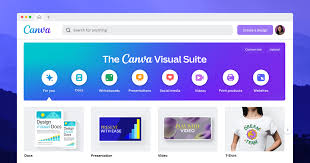
The Canva Design Platform removed the “blank page syndrome” by providing millions of high-quality templates. In 2026, these templates are no longer static; they are dynamic, responsive, and AI-optimized, allowing a small business owner in Azerbaijan or a marketing executive in New York to produce the same quality of work in minutes.
3. The 2026 Game Changer: Canva Magic Studio
The year 2026 marks the peak of the AI revolution within the design world. Canva’s Magic Studio is the centerpiece of this evolution. Unlike other AI tools that require complex “prompt engineering,” Magic Studio is designed to be intuitive.
3.1 Magic Design: Instant Layouts
Magic Design allows users to upload a single media file or type a short sentence, and the AI generates a full set of coordinated designs—presentations, social media posts, and videos—in seconds. This feature utilizes multimodal AI models to understand the context of the user’s intent.
3.2 Magic Media: Text-to-Everything
In 2026, Canva’s text-to-image and text-to-video capabilities have reached photorealistic levels. Using proprietary latent diffusion models, Magic Media allows creators to generate unique assets that don’t exist in stock libraries, bypassing copyright issues and saving hours of searching.
3.3 Magic Edit and Magic Grab
Image manipulation, which once took hours of meticulous “masking” in Photoshop, is now a one-click process. Magic Edit allows users to describe a change (e.g., “change the coffee cup to a glass of orange juice”), and the AI executes it flawlessly. Magic Grab treats any element in a static photo as a moveable object, giving users unprecedented control over flattened images.
4. Canva for Enterprise: Scaling Global Brands
While Canva began as a tool for individuals, its 2026 growth is heavily fueled by the corporate sector. Canva Enterprise has become the industry standard for maintaining brand integrity.
4.1 The Brand Kit 3.0
In a globalized world, brand consistency is vital. Canva’s Brand Kit allows organizations to centralize their visual identity. This includes:
- Strict Color Palettes: Locking hex codes so no employee can use an off-brand shade.
- Typography Controls: Uploading custom brand fonts and setting hierarchy rules.
- Approval Workflows: A built-in system where designs must be approved by a creative director before being published or printed.
4.2 Real-Time Global Collaboration
The Canva Design Platform functions as a live “cloud-native” environment. Multiple team members can work on a single presentation simultaneously. In 2026, this includes integrated video conferencing and “Presenter Mode” where the audience can interact with the slides in real-time.
5. The Technical Backbone: Cloud Computing and AI Infrastructure
To support 170 million users, Canva’s infrastructure is a masterpiece of modern engineering.
5.1 Microservices and Scalability
Canva uses a microservices architecture, primarily hosted on AWS (Amazon Web Services). This allows the platform to scale specific features (like the video editor) independently during peak usage times.
5.2 Security and Compliance
In 2026, data privacy is a top priority. Canva complies with GDPR, CCPA, and holds ISO/IEC 27001 certification. For enterprise clients, this ensures that proprietary designs and internal communications are encrypted and never used to train public AI models without consent.
6. Canva vs. Adobe: The Competitive Landscape in 2026
The rivalry between Canva and Adobe has reached a fascinating equilibrium. While Adobe remains the choice for high-end professional photography and cinematography, Canva has captured the “Visual Communication” market.
| Feature | Canva Design Platform | Adobe Creative Cloud |
| Accessibility | 10/10 (Beginner friendly) | 4/10 (Pro-level skills required) |
| Speed to Market | Ultra-fast (Minutes) | Slow (Hours/Days) |
| AI Integration | Seamless & Invisible | Modular & Technical |
| Cost | High ROI for small teams | High overhead for specialists |
7. The Economic Impact: The Canva Ecosystem
Canva has created an entire secondary economy.
7.1 The Creator Program
In 2026, Canva’s marketplace allows independent designers to sell their templates and elements. Top creators are earning six-figure incomes purely by designing for the Canva Design Platform.
7.2 Canva Developers and Apps
Canva now features an “App Store” where third-party developers build integrations. From AI-driven translation tools to direct publishing integrations with social media platforms like TikTok and Instagram, the ecosystem is vast.
8. SEO and Digital Marketing Strategy with Canva
For marketers using tools like Rank Math, Canva is an essential asset.
- Visual Search SEO: By creating unique, high-quality images in Canva, websites can rank in Google Images, which is a major traffic driver in 2026.
- Infographics and Backlinks: Canva makes it easy to create data-driven infographics. When other sites cite these graphics, they provide valuable backlinks, boosting the overall SEO score.
9. Case Study: How a Startup Used Canva to Scale
Consider a fintech startup in 2026. Instead of hiring a full-time design agency, they utilized Canva for Teams.
- Result: They produced 500+ social media assets, 3 investor pitch decks, and 10 promotional videos in their first quarter.
- Cost Savings: An estimated $40,000 in agency fees, with a 300% faster turnaround time.
10. The Future: 3D, VR, and Beyond
What does the future hold for the Canva Design Platform? By 2027-2028, we anticipate:
- Spatial Design: Creating assets for AR/VR glasses like Apple Vision Pro.
- Holographic Presentations: 3D interactive slides that appear in physical space.
- Hyper-Personalization: AI that automatically adjusts a design’s colors and messaging based on who is viewing it.
11. Conclusion: The Power of Visual Fluency
In the 21st century, visual communication is a required literacy. The Canva Design Platform has not just provided a tool; it has provided a voice to millions who were previously “visually silent.” By merging advanced AI with a relentless focus on user experience, Canva has secured its position as the world’s most important design ecosystem.